Field duty cycles punish gears differently from road trucks. Here are the four wear modes that matter and the checks that prevent them.
2026-06-24 · Gear Knowledge
A tractor gearbox lives a different life from a truck gearbox. Loads are high at low speed, throttle response is abrupt, and the same gear may sit under full torque for hours in the furrow. Add dust, wide ambient temperature swings and infrequent maintenance, and the failure modes shift toward pitting, root cracking and spline wear.
Pitting on the flank usually means the case depth or the lubricant film is wrong for the load. In agricultural duty the surface fatigue accumulates slowly and then accelerates; a gear that passed a 500-hour bench test can fail at 1,500 hours in the field. Case depth at the pitch line should be specified for the actual load spectrum, not copied from an automotive drawing.
Root cracking is almost always a forging or heat-treatment story. If grain flow is cut off at the root, or if quenching leaves tensile residual stress there, bending fatigue life drops sharply — even when hardness readings look correct. Shot peening helps, but it does not replace proper grain flow.
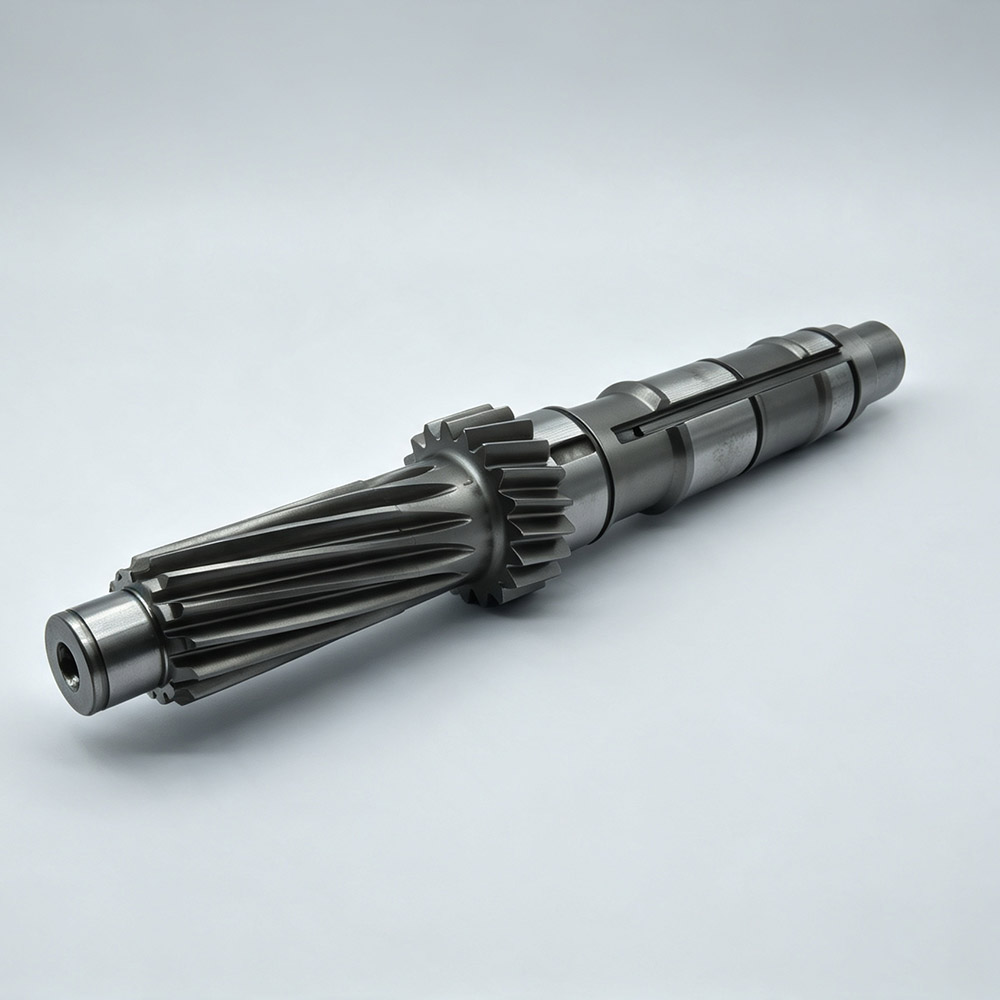
Spline and bore wear point at fit and finish instead. Loose fits, poor concentricity or a bore that distorts after quenching will fret under reversing loads. A sourcing checklist for tractor programs should therefore include: steel certificate with heat number, forging lot traceability, case depth at root and flank, core hardness, bore roundness after quenching, and contact pattern at 30% load.